


Syllabus: GS2/ International Relations
Context
- According to some recent reports Iran and the United States have reached a preliminary framework for renewed diplomatic engagement after a prolonged period of tensions.
Background
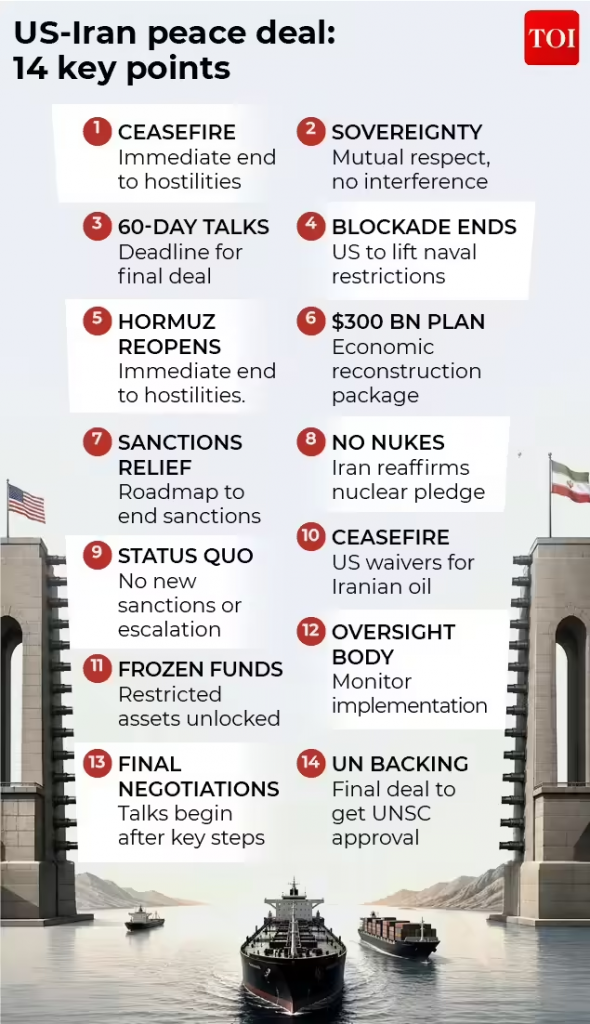
- The pact includes a 14-point Memorandum of Understanding (MoU) between the United States and Iran outlining a roadmap for de-escalation, restoration of commercial navigation through the Strait of Hormuz, and negotiations on sanctions relief etc.
- It also includes an immediate halt to military action, including in Lebanon, and a 60-day negotiation period.
Evolution of Iran–U.S. Nuclear Diplomacy
- The 2015 Nuclear Agreement: The Joint Comprehensive Plan of Action (JCPOA) was signed between Iran and the P5+1 countries.
- Iran agreed to limit uranium enrichment and accept enhanced inspections in exchange for sanctions relief.
- U.S. Withdrawal and Renewed Tensions: The United States withdrew from the JCPOA in 2018 and reimposed sanctions on Iran.
- In response, Iran gradually reduced its compliance with several provisions of the agreement.
Potential Opportunities of Iran–U.S. Agreement
- The reduction in tensions will lower the risk of military confrontation and proxy conflicts across the region.
- Also the stable conditions will ensure smoother energy flows and reduce volatility in global oil markets.
- Improved security conditions will encourage trade, investment, and reconstruction efforts in conflict affected areas.
- For India, improved regional conditions are necessary to boost the development of Chabahar Port and the International North-South Transport Corridor (INSTC).
What are the Challenges?
- Deep-rooted mistrust among regional actors continues to hinder lasting peace.
- The influence of non-state armed groups and proxy networks are going to complicate regional security.
- Key disagreements over Iran’s nuclear programme and the future regional security framework remain unresolved.
Concluding remarks
- The diplomatic engagement between Iran and the United States highlights the continuing relevance of dialogue in addressing complex geopolitical disputes.
- Though significant differences persist, sustained diplomacy and confidence-building measures remain essential for promoting regional stability, and fostering a more peaceful and cooperative order in West Asia.
Source: TOI
Previous article
Demands to Repeal VB-G RAM G
